
For quite a number of years we have been advised not to change ourselves for another person, based on the idea that too many people have lost themselves in relationships and have forgotten who they originally were.
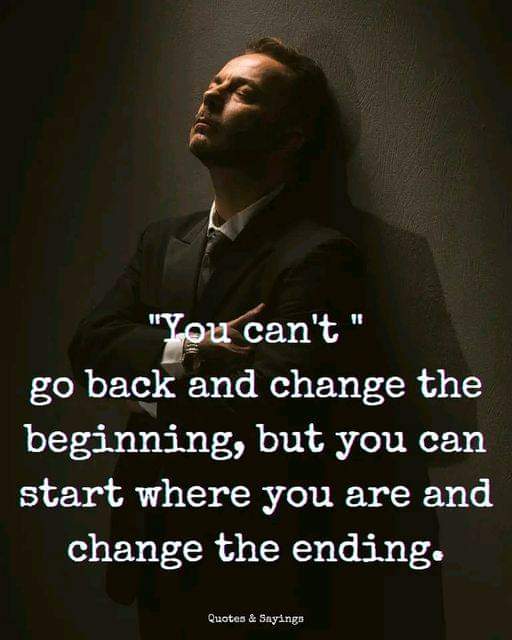
This is great advice but unfortunately we’ve see the pendulum shift to the other side where people have no desire to change any behaviors at all, and state they expect their partner to accept them just as they are.
Unfortunately this also creates situations where each person may be doing things that antagonize or even put the mental health of their partner at risk, so today I’m going to present a different approach to navigating these two extremes.
I’m proposing that when two people sit down together to discuss how their partner’s behavior and actions are contributing to their unhappiness, that each person will wish to modify their behavior to help relieve that area of discomfort or distress in their partner, who they love and care about their wellbeing.
I found to following two passages to be quite persuasive:
Change Others by Changing Yourself: Start where you are By Kyle
“In therapy, a great clinician will meet the patient where they are to build relations.
“In negotiation, a great navigator will focus on their opposition and turn it into opportunity.
“In relationships, a great lover will treat their spouse the way the spouse wants to be treated.
“In games, a great player will adapt to a dynamic environment with the opponent’s moves in mind.
“It is never about changing people — it’s about changing yourself in ways to inspire people. It is about changing the approach to a conversation to learn more about the other person’s wants and needs. It is about changing you, to create a change in others.
“Imagine for a moment you are living your life, and something does not go the way you want. What do you do?
“Do you do the same thing again and hope for a different outcome? No. You change the approach. And if that does not work? You change again.
“The popular saying attributed to Albert Einstein is that “the definition of insanity is doing the same thing over and over again and expecting a different result,” and yet so many of us continue to sit in the same behaviors, do the same actions, and wonder why life is not changing for the better.
“Can you think of a person who refuses to change and expects the world to change for them? Do you think you are that person, too?
“Imagine for a moment you are — where does it take you?
“Do conversations you wish could have ended different pop into your head? Do actions you were unsure of and consequences you wished to avoid come to mind? What will you do differently next time?
“A single person can change the world. But they must change themself to start.
“You can only control your life. Do so indefinitely.”
When We Try to Change Others and Avoid Ourselves By Michelle D’Avella
“I’ve discovered that you can’t change people. They can change themselves.” ~Jim Rohn
“You may argue that we help each other change, and it’s true. But the deepest truth is that only we are responsible for our own growth.
“The most difficult work is the seemingly minuscule shift from resistance to willingness, which allows us to face the difficult things we’ve been hiding from, and only we can do this for ourselves.”
What are the steps then that couples can use to work together to change in ways that each person needs in order to be happy and healthy?
The tried and true way of trying to get a partner to change a behavior is to focus on the other person, tell them what you want and then expect them to immediately change – because “they will if they truly love me”. If they don’t immediately change, then there is an assumption that “they really don’t care for me that much then” and get angry when changes aren’t seen. Rinse and repeat, until neither person trusts the other to change or really believe they want to change.
Does that sound familiar to you?
When a partner points out a behavior that is annoying or even detrimental, chances are, other people are annoyed by this behavior as well, but work colleagues or family don’t always say anything. A spouse however will speak up, because there is a much deeper relationship, they have committed their lives to one another, and each person has ideas about how they wish things to go.
What is a different approach?
If we’re always focused on what the other person isn’t doing, we aren’t paying attention to how we ourselves may be annoying the tar out of our partner.
When each person in the couple is committed to their partner’s happiness and well-being, if they focus on changing a behavior in themselves that is aggravating or even detrimental to the other person, both people benefit.
It does take both people actively working on themselves for this to work.
Steps to take:
Step 1: Sit down together and each person write down 3 things that they would like their partner to change.
Step 2: Next write down how that behavior is currently affecting you.
- Is it annoying?
- Is it adding to your own workload?
- Is it affecting your mental health?
- Is it costing money from the budget that just isn’t there?
- Does it go against a religious or moral principle?
- Some other reason not stated here?
Step 3: Next look at all 3 and number them 1 to 3, 1 being the item that has the strongest effect on you, down to the least – but certainly not unimportant.
In all fairness, it is easier for each of us to change one behavior than it is to change three at the same time.
Just because we’re choosing the one thing that is the highest priority doesn’t mean that the rest of the items aren’t important or don’t need to eventually be looked at. The first step is to select the one that is the most meaningful or may have the deepest impact.
The other items on the list can be tackled later. However, if an item is very easy to make a change, there is nothing saying that it has to wait, but the focus really should be on the #1 item your partner is saying is the most important to them.
What if the #1 item is actually difficult for that person to change because of longstanding, ingrained habits?
Let’s look at Neural Pathways and the role the play in creating our patterns of behavior and how to change them.
Neural Pathways according to Dr. Susan Rieck in “The brain and our habits: Natural pathways to wellness”:
“Pathways in the brain are made by connections between neurons (nerve cells). When a behavior is performed, the connections between these cells change with the frequency of the behavior performed. These neural pathways are like grooves in the road maps of our brain. The more frequently we travel the road, the stronger and more second nature the behavior. You can practice traveling down “new roads” or neural pathways by performing a new behavior with frequent repetition, connecting new beliefs to support the new behavior, as well as visualizing a positive outcome resulting from these new behaviors.
“Just because we have created rigid neural pathways and behaviors over many years does not leave us trapped to repeat those habits forever. We can create new pathways by participating in new activities and developing new behaviors. It is important to practice repetition of the new activity to help the pathway become stronger with the greater number of times the brain cells “fire” to conduct the new activity. The wiring together of brain cells makes the new behavior feel routine and easier over time. It requires about 10,000 repetitions — translating to a minimum of three months of practice — to develop a new neural pathway and master a new pattern of behavior. This timeframe can fluctuate, as each brain is unique.”
As you can see, it takes persistence to keep repeating the new behavior, sometimes a whole lot of persistence! By tackling one behavior change at a time does make it easier for the newly chosen actions to “stick”, instead of overwhelming ourselves with the whole list!
(We tend to respond better to rewards than to threats or anger, so what if we “reward” our partner with a kiss, or a smile and “thank you”? No telling the other person “See, wasn’t that easy?” because it may not be easy at all to change!)
Step 4: This step is going to require each person just listen to the other without getting defensive and interrupting.
No doubt these issues have come up before and have been a bone of contention between the couple for a while, and each one no doubt has invested time and energy “to get the other person to change”.
If you’re reading this now, you may be very frustrated that not only has your partner not changed their particular behavior, but they seem to get defensive and now have dug in!
The intention of this exercise is to each partner to REALLY listen to the other person with an open heart. The idea is to have each person see the bigger picture.
It isn’t about picking on someone or even picking apart someone. Just because we have done things a certain way for quite a while doesn’t mean there isn’t a need to change, or that asking someone to do something in a different way they have normally done something equals the other person asking us to change who we are as a person.
Quite the opposite in fact. None of us do everything perfectly all the time, and just because we think we’re a good person doesn’t mean we are immune to annoying someone or even doing something that can have a detrimental effect on them.
Each person gets a turn to explain to the other, as factually as possible, without using words like “always” and “never” to explain what they see is going on, tell how it affects them and how they are interpreting their partner’s behavior, and just as importantly, how they are interpreting the non-changing.
This isn’t about arguing if the person is valid or not in their perception of that particular behavior. If it is upsetting the other person enough to have made it to the top 3 of their list, it is valid!
If you find yourself feeling very defensive about that particular behavior, take a little time to reflect on why that is.
Ideally each person gets a turn to share their thoughts and feelings about each of the 3 items. Alternating may work out well, as long as you agree on the flow.
Discussing the items without getting defensive is the goal of this exercise. By bringing these items up and showing the bigger picture, hopefully each person will become inspired to work on these items and alter their behavior to help their partner.
Step 5: would be to check in with each other, perhaps weekly to see how their partner perceives the changes that have been worked on. One person may feel they are making great efforts to change, while their partner sees minimal changes.
If that is the situation, more discussions may be needed to detail how the one person has been making efforts, so the other person can see what the “stats” are.
Try thinking in terms of sports: out of how many attempts were there successes? Is the ratio of attempt to successes improving? Why or why not? It isn’t about keeping score against each other, but raising our own success rates.
If you’re doing this, rest assured you both love each other and are making efforts to make you partner feel happy, safe and heard. It isn’t about “proving one’s love” and if a person isn’t improving or changing it isn’t that they “just don’t care enough”!
Hopefully both people will be able to change how they see their partner’s needs, and both people will be able to drop the defensiveness that was built up from the previous unsuccessful attempt at trying to “get the other person to change”.
The answer is in changing our own behavior when it has been brought to our attention that it is really bothersome to the other person.
When these exercises are practiced by both people in the couple, over time you will see improvements. Hopefully this will open a healthier dialogue instead of each person going after the other when they’re really aggravated.
It will take time and repeated efforts to change those go-to behaviors that have built up, but honestly, many of the behaviors are not great immense things that require a personality overhaul. Many of those things require us to become more in tune with how we may be aggravating our partner over something we haven’t given much thought to before.
This is a little bit of a different approach than anything you may have done before, so it may feel very unnatural to sit down and talk this way.
It is just a different tool to becoming more open with each other, and can help foster a greater understanding of how your partner ticks!
More:
- No matter how long you’ve traveled in the wrong direction, you can always turn around
- The most important spiritual growth doesn’t happen when you’re meditating or on a yoga mat.
- You are allowed to be both a Masterpiece and a Work in Progress, simultaneously.
- Let your past make you better not bitter.
- Often it’s the deepest pain which empowers you to grow into your highest self.
- This world may never understand you. That is not your fault, that is your gift.
- How to stop taking things personally
- Forget the pain but never the lessons you gained.
- Nothing is set in stone! “What have I got to lose?”
- Are you co-dependent and trying to hang on at all costs?
- Green flagged – people who are considered good people have these traits
- Changing our thoughts and habits Part 1: how does it physically work in the brain?
- Changing our thoughts and habits Part 2: how does it physically work in our body?
- Accepting and Embracing the Depressed Side of Ourselves
- The Power of Positive Words!
- It turns out this isn’t as woo-hoo as I thought it was!
- Challenge: When a negative thought enters your mind, think three positive ones. Train yourself to flip the script!
- As you think so shall you be!
- Even after a setback or negative experience, we can create a “reset” button in our minds!
- Turning Poison into Medicine
- Your triggers are your teachers
- Change the tapes!
- Baby steps serve a purpose to allow us to keep moving forward!
- Baby steps start the whole change happening!
- Teach ourselves to feel positive in order to see more positive things in our lives!!
- Red Ocean or Blue Ocean? How do you think?
♥ ♥ ♥ ♥ ♥
Merch: click on each to see available items
Blessings!
Thank you for sharing this post and for following me!
Tamara
I hope you’ll poke around my Archived Posts to find a wonderful trove of supportive and encouraging posts! Don’t forget to Like, Comment, and Follow my blog! If you want to become a Guest writer, please contact me and we’ll work out the details!
https://tamarakulish.com/ Archived Posts: https://tamarakulish.com/archived-posts/
My books: Now available through Walmart.com!
Developing Happiness When You Can’t Find It and How to Heal Your Life on a Deep Heart Level are available in paperback and Kindle. Audiobooks are available for the busy person!
Guided Journals help you work on a particular issue by answering questions to help see patterns and to find solutions:
Removing Inner Blocks, Anger Journal, Guided Anxiety Journal Joy & Mindfulness Journal My Boundaries Journal My Inner Thoughts Journal
Thanks for buying my books on Amazon!
#writing #InspirationalWriting #art #creativity #strength #mentor #teacher #HappinessGuru #love #growth #healing #life, #inspiration, #quotes #happiness #joy #PersonalGrowth #pain #depression #anxiety #SelfEsteem, #LifeSkills #empowerment #encouragement #support #intuition #journal #consciousness #mind #learn #God #universe #angels #spiritual #spirit #awareness #journal #boundaries #emotionalhealth #mentalhealth #emotions
Discover more from Tamara Kulish
Subscribe to get the latest posts sent to your email.

 Tamara Kulish
So many great tips and quotes, Tamara. The openness in working with others to change and the optimism that we can groove new neural pathways – it’s so hopeful and helpful. Thank you!
LikeLiked by 1 person
Thank you Wynne! Too often people feel helpless to change, so it is easier to focus on other people’s behavior instead of our own isn’t it? We all need some hope to be able to turn ourselves and our relationships around!
LikeLiked by 1 person
Excellent information!
LikeLiked by 1 person
Thanks so much! Please feel free to share!
LikeLiked by 1 person
Wow, I feel like you are speaking to me personally. I get lost in these if you cared/loved me you’d change habits with my husband and family.
I love the compassionate and rational approach you’ve shared here with how to move through those times together in a way that strengthens each person and the relationship. This approach makes sense to me, and is super detailed and doable.
Thanks for this wonderful guideline and encouragement! It’s beautiful ❤️
LikeLiked by 1 person
Thanks so much! I’d love to hear how things might change if you try this approach! It’s simple, yet quite different at the same time!
LikeLiked by 1 person
Which I had such sound advice available when I was dealing with my broken marital relationship.
LikeLiked by 1 person
Even if you had, unless 2 people are willing to put it into operation, it would have been 1 sided. This approach may not work in abusive situations, because 1 person isn’t able to think that way.
LikeLiked by 1 person
So true.
LikeLiked by 1 person
I wish it applied more broadly!
LikeLiked by 1 person
It takes a long time to build that courage, and step beyond our fears. But because of that, that very moment that we do, we will touch something inside us so profound…and finally, truly know what love is. And in that trail behind us, also see that it needed it all so that at this very moment we finally understand our love was a very conditional love indeed…and now truly know what unconditional love is because of it.
Great share Tamara, from someone who dared its path. Thank you 😀❤️🙏
LikeLiked by 2 people
Thanks Mark, yes, for both people to successfully do this, both must be committed to making the relationship work, and not just 1 person doing it while the other doesn’t. It is something that must be done by both, and done in trust and faith of the other doing it too.
LikeLiked by 1 person